Salvation Denied Playtest: Chaos Meets Construction in This Co-Op Madness
 Steven Wright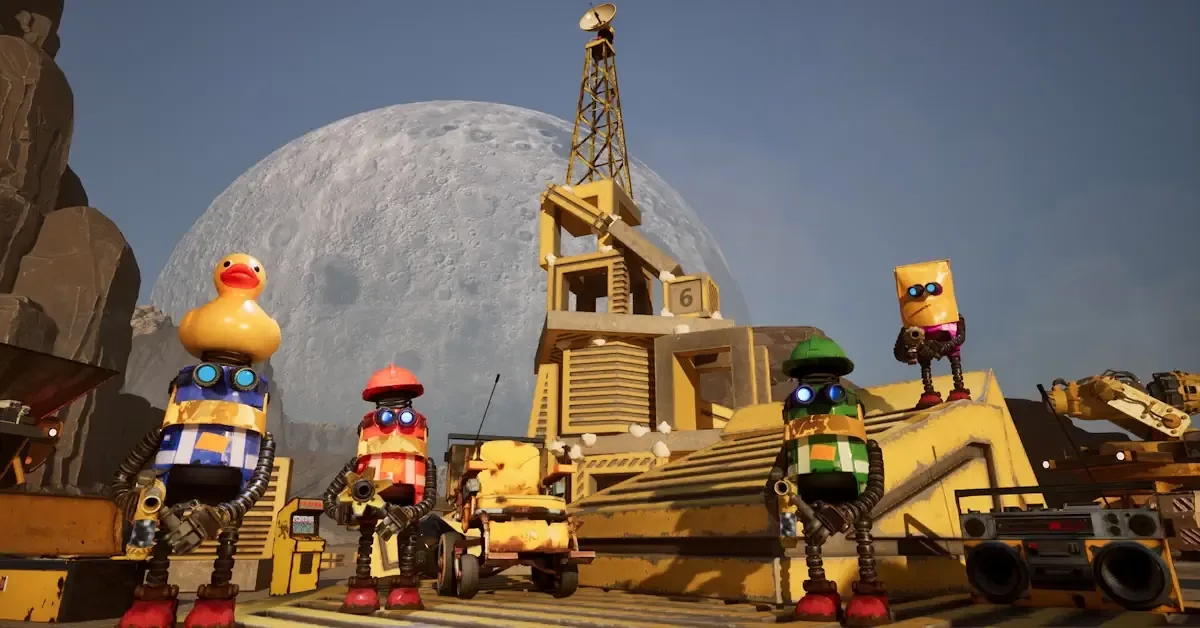
The construction site erupted into chaos. Yellow robots scattered in every direction as a meteor shower rained down on their half-built tower. One robot frantically wielded a Foam Gun, desperately trying to patch the crumbling walls, while another piloted a Gravity Tank to stabilize the structure's foundation. Within seconds, the entire edifice collapsed into a heap of rubble, and voice chat exploded with laughter and accusations. This is the beautiful disaster that is Salvation Denied.
A Construction Job Like No Other
Digital Vortex Entertainment and Firevolt have unleashed something special upon the gaming world. Salvation Denied isn't just another building game where blocks magically float in place—it's a physics-driven nightmare wrapped in cooperative fun. Players assume the roles of quirky yellow robots, contracted by an extremely fanatical client whose demands are as unreasonable as they are entertaining. The premise is simple: construct massive structures while fighting against the laws of physics and the chaos your teammates inevitably create.
The game's foundation rests on the HAVOK physics engine, a technology that transforms every building block into a potential catastrophe. Unlike traditional building simulators where structures obediently hold their shape, Salvation Denied forces players to consider weight distribution, structural integrity, and the consequences of placing a support beam even slightly off-center. One wrong move, and you're watching your architectural masterpiece crumble before your eyes. It's stressful, hilarious, and utterly addictive.
What truly sets this experience apart is how the physics system creates emergent gameplay moments. A tower that seems stable might suddenly develop a dangerous lean. A bridge that held five minutes ago might collapse under the weight of one additional block. These unpredictable moments generate stories that players will retell for weeks—like that time someone's Gravity Tank accidentally pushed an entire floor section off the edge, or when a poorly placed Foam Gun blast sent half the team tumbling into the void.
The Arsenal of Absurdity
The developers clearly understand that chaos needs proper tools. Salvation Denied equips players with an arsenal of bizarre construction equipment that ranges from genuinely useful to wonderfully destructive. The Gravity Gun serves as your primary manipulation tool, allowing robots to blast materials across the construction site with satisfying force. Need to move that steel beam twenty feet to the left? Fire up the Gravity Gun and send it flying—just hope it doesn't take out your teammate in the process.
| Tool | Primary Function | Chaos Potential |
|---|---|---|
| Gravity Gun | Material manipulation and launching | High - can accidentally demolish structures |
| Foam Gun | Emergency structural patching | Medium - overuse creates unstable supports |
| Gravity Tank | Heavy lifting and section movement | Very High - one wrong move shifts entire builds |
| Fatboy | Bulldozer-shredder hybrid | Extreme - basically a wrecking ball with wheels |
The Foam Gun deserves special mention for its dual nature. In theory, it's a lifesaving tool that patches cracks and reinforces weak points. In practice, it often becomes a source of desperate, last-minute improvisation as players spray expanding foam everywhere while screaming instructions at each other. The visual of yellow robots frantically hosing down a collapsing building with foam while meteors rain from above perfectly encapsulates the game's energy.
For those moments when subtlety fails—and it will fail constantly—the Gravity Tank enters the picture. This heavy machinery allows operators to shift entire sections of a build, which sounds incredibly useful until someone accidentally drives it through a load-bearing wall. Then there's the Fatboy, a bulldozer-shredder hybrid that exists solely to test your team's ability to not destroy everything you've worked for. Somebody always wants to drive the Fatboy. That person is always dangerous.
Nature's Violent Interruptions
Just when you think you've got a handle on the physics and your team's coordination, Salvation Denied throws natural disasters into the mix. According to the official Steam patch notes, events like Meteor Showers and Acid Rain transform stable construction projects into emergency damage control scenarios. These aren't gentle weather effects—they're full-blown catastrophes that demand immediate response and perfect teamwork.
Meteor Showers, currently available in the playtest, exemplify the game's approach to difficulty spikes. Flaming rocks plummet from the sky, smashing through structures and creating chain reactions of destruction. Teams must simultaneously repair damage, maintain structural integrity, and avoid getting crushed by falling debris. The proximity voice chat system transforms these moments into symphony of panic, with directional audio letting you hear exactly where your teammates are as they shout warnings and pleas for help.
Acid Rain brings a different kind of terror. Instead of sudden impact damage, it slowly corrodes structures, forcing players to race against time while their carefully planned builds dissolve before their eyes. The psychological pressure differs from meteors—it's not explosive chaos but creeping dread as you watch supports weaken and realize you might not have enough time to reinforce everything. Teams must prioritize, deciding which sections to save and which to abandon, often leading to heated debates about strategy... or just screaming.
These disaster mechanics create incredible pacing variation. Calm building periods allow teams to plan and construct, while disasters force rapid response and improvisation. The contrast keeps sessions feeling dynamic and prevents the gameplay from settling into predictable routines. You never quite know when the next catastrophe will strike, which maintains a low-level tension even during peaceful construction moments.
The Social Engineering Challenge
While Salvation Denied supports up to four-player co-op, the game transforms dramatically based on your team size. A full four-person squad offers maximum chaos potential, with enough players to specialize in different roles while still maintaining sufficient confusion to generate hilarious failures. Someone can focus on structural planning while others handle material movement, though plans tend to dissolve once the first disaster hits and everyone starts doing everything simultaneously.
🎮 Team Dynamics:
-
Solo Play: Transforms into a methodical puzzle experience with complete control
-
Duo: Requires excellent communication and role division
-
Trio: Sweet spot between chaos and coordination
-
Full Squad: Maximum hilarity, minimum predictability
Playing solo strips away the multiplayer chaos and reveals the game's core puzzle design. Without teammates to blame—or cause unexpected problems—players can methodically approach each challenge, carefully planning structural solutions and timing their responses to disasters. It's a more cerebral experience that highlights the physics system's depth. Some players might actually prefer this controlled environment, though they'll miss out on the social comedy that makes the multiplayer so memorable.
The proximity voice chat deserves special recognition for enhancing the social experience. Rather than standard voice channels where everyone hears everything equally, Salvation Denied uses spatial audio that changes based on player positions. This seemingly small feature creates profound gameplay moments—like hearing a teammate's voice fade as they fall from a collapsing tower, or detecting someone's panicked shouts through a wall before you see the danger they're warning about. It's immersive, funny, and occasionally haunting when someone's voice cuts off mid-scream.
The Playtest Opportunity
For those intrigued by this combination of physics chaos and cooperative construction, timing couldn't be better. The open playtest launched on March 25, 2026, and runs through March 31—a full week for players to experience the madness firsthand. Digital Vortex Entertainment and Firevolt clearly want as much feedback as possible before the Fall 2026 release, and they're offering substantial content to evaluate.
The playtest includes the first full scenario, giving participants a complete taste of the campaign structure. You'll receive access to the full tool arsenal, meaning every piece of bizarre equipment mentioned above is available for experimentation—and inevitable misuse. The Meteor Shower event is also active, ensuring everyone experiences at least one variety of natural disaster. This generous access suggests the developers are confident in their core gameplay loop and eager to stress-test it with a large player base.
Participating requires minimal effort. Simply navigate to the Salvation Denied Steam page and click the Playtest button. No purchase necessary, no lengthy application process—just instant access to physics-driven construction chaos. The low barrier to entry makes this an excellent opportunity for curious players who aren't sure if the concept appeals to them. You've got nothing to lose except maybe some friendships when you accidentally demolish someone's perfectly placed support structure.
😅 The developers clearly understand their game's potential to create both triumph and disaster in equal measure. That's probably why they're offering such extensive playtest access—they want to ensure the physics system can handle the creative destruction players will inevitably unleash.
Platform Plans and Future Development
The full PC release is scheduled for Fall 2026, giving Digital Vortex Entertainment and Firevolt several months to incorporate playtest feedback and polish the experience. This timeline suggests confidence in the game's current state while acknowledging room for refinement. The Fall window also positions Salvation Denied well for the holiday gaming season, when cooperative titles traditionally perform strongly.
Console enthusiasts won't wait too long either. PlayStation 5 and Xbox Series X versions are confirmed for 2027, bringing the physics chaos to living rooms everywhere. The year delay makes sense given the optimization challenges physics-heavy games face on consoles. The HAVOK engine needs to maintain stable performance even when multiple players are simultaneously manipulating dozens of physics objects during a meteor shower. That's computationally demanding, and the development team clearly wants to nail the console experience rather than rushing it out.
Release Timeline:
-
✅ March 25-31, 2026: Open Playtest (PC)
-
🗓️ Fall 2026: Full PC Release
-
🎮 2027: PS5 and Xbox Series X Launch
The staggered platform release also allows for cross-platform development learning. Issues discovered during the PC launch can be addressed before console versions ship, benefiting all players in the long run. Additionally, the PC version will likely receive content updates throughout late 2026, meaning console players might launch with a more feature-complete experience when their versions arrive.
Why This Matters for Co-Op Gaming
Salvation Denied arrives at an interesting moment for cooperative gaming. While the market is flooded with competitive multiplayer titles and solo experiences, genuinely innovative co-op games remain relatively rare. The combination of serious physics simulation with intentionally chaotic multiplayer creates a niche that few titles occupy. Games like Human Fall Flat and Gang Beasts proved there's appetite for physics-based multiplayer comedy, but Salvation Denied adds genuine construction mechanics and disaster survival elements to that formula.
The game also represents a refreshing approach to failure. In most building games, failure means starting over or losing progress—frustrating outcomes that punish mistakes. In Salvation Denied, failure is content. When your tower collapses because someone drove a Fatboy through the foundation, that's not a setback—it's a story. The game embraces the comedy inherent in its physics system rather than fighting against it, creating an environment where disasters are as entertaining as successes.
This philosophy extends to the game's accessibility. You don't need to be a skilled gamer to enjoy Salvation Denied—in fact, having one less-experienced player often enhances the chaos in entertaining ways. The proximity voice chat ensures everyone stays engaged and connected, while the physics system creates natural comedy that transcends skill levels. It's the rare multiplayer game that can accommodate both hardcore gamers and casual players in the same session without anyone feeling left out.
Final Thoughts on Foundation and Chaos
Salvation Denied promises something increasingly rare in modern gaming: genuine unpredictability. Every session will generate unique moments of triumph and disaster, driven by player creativity and the unforgiving laws of physics. The week-long playtest offers an excellent opportunity to experience this chaos firsthand, whether you're gathering friends for cooperative madness or tackling the challenges solo.
The development team has clearly invested significant effort into making the physics system feel consequential without becoming frustrating. That balance—between realistic structural challenges and accessible fun—will likely determine the game's long-term success. Early signs from the playtest period suggest they've found that sweet spot, though the true test comes when the full player base gets their hands on it this Fall.
For anyone who's ever wanted to combine Kerbal Space Program's engineering challenges with Gang Beasts' physical comedy, wrapped in a cooperative package with actual objectives—this might be exactly what you've been waiting for. Just remember: when your friend asks to drive the Fatboy, maybe suggest they focus on the Foam Gun instead. Your carefully constructed tower will thank you. Though honestly, watching it all collapse might be more fun anyway. 🏗️💥
